

The pace of modern life is faster than it has ever been. Many people experience mental exhaustion before the day even starts due to the constant barrage of notifications, work obligations, family responsibilities, financial worries, and social expectations.
In the USA and the UK, millions of people look for strategies to lower stress, enhance mental health, and achieve long-term enjoyment. However, many find that having more money, a better career, or a perfect life doesn’t lead to peace of mind. Rather, it results from learning how to control expectations, feelings, and thoughts.
Quotes about peace of mind are still quite effective because of this. They serve as a reminder to take our time, concentrate on what’s really important, and let go of unneeded concerns. You may create a more balanced, healthier, and peaceful existence with the guidance of these classic sayings.
Table of Contents
Why It’s So Hard for People to Find Peace of Mind
By attempting to control everything around them, many people unintentionally cause stress. They compare themselves to others, fret about future events, relive previous transgressions, and look to others who might never be satisfied for approval.
Anxiety, stress, frustration, and emotional tiredness can result from this ongoing mental strain. Many people experience interior overwhelm even in situations where life seems successful on the outside.
In actuality, having no troubles does not equate to having peace of mind. It’s the capacity to maintain composure in the face of adversity. You can experience everyday life in a completely different way if you learn this lesson.
How to Make Your Life More Calm
The first step in achieving inner peace is altering your perspective.
Concentrate on the things you can control rather than everything that might go wrong. Stop bearing responsibilities that don’t belong to you, cultivate thankfulness, establish healthy boundaries, and forgive yourself for your mistakes.
Stress has less of an impact on your life when you learn to prioritize emotional balance and safeguard your energy.
You can be guided toward a more tranquil and satisfying future by the following quotes about peace of mind.
15 Peace of Mind Quotes for a Stress-Free Life
- “Nothing can bring you peace but yourself.” — Ralph Waldo Emerson
Meaning and Explanation
This proverb emphasizes one of life’s most fundamental truths: enduring tranquility comes from inside. Many people spend years assuming that happiness is dependent on finding the proper partner, making more money, or accomplishing a certain objective. While these items may provide brief satisfaction, they rarely result in long-term emotional tranquility.
True peace comes when you learn to accept yourself, trust your path, and cease relying on external circumstances for emotional stability. Life will always be uncertain, but having a strong inner foundation allows you to remain calm in challenging situations.
People who grasp this notion frequently have less stress because they no longer seek validation from others. They know that they are responsible for their emotional well-being.
Real-life Example
Imagine two coworkers facing criticism from their manager. One remains agitated for days, continuously thinking about the feedback. The other accepts criticism, learns from it, and moves on. The difference is not in the issue itself, but in how each individual responds internally.
- “Do not let the behavior of others destroy your inner peace.” —The Dalai Lama
Meaning and Explanation
Allowing the acts of others to dictate your emotions is one of the most significant barriers to peace of mind. Criticism, gossip, negativity, and disrespect can quickly overwhelm your attention if you give them too much weight.
This phrase reminds us that maintaining peace is a human responsibility. We have no control over what people say or do, but we can control how we react. Recognizing that not every point of view is worthy of our attention leads to emotional development.
When you stop taking everything personally, you gain more freedom and mental stability. Life becomes lighter because you are no longer carrying unnecessary responsibilities caused by other people’s actions.
Real-life Example
Someone made a harsh comment on social media. One individual spends hours angry and unhappy, while another ignores it and goes about their day. The event is the same, but the response decides the result.
- “Peace begins with a smile.” – Mother Teresa
Meaning and Explanation
Many people believe that peace involves drastic changes, but it typically starts with simple daily gestures. A smile expresses friendliness, gratitude, patience, and openness. It can boost not just your mood, but also the atmosphere around you.
Small positive deeds have far-reaching consequences. When you approach issues with kindness rather than frustration, conflicts are typically easier to resolve. Peace is established via innumerable modest choices rather than a single significant decision.
A simple smile can remind you to stay in the present moment rather than becoming overwhelmed by tension and concern.
Real-life Example
Consider attending a crowded office where everyone appears agitated. A nice smile from a coworker may quickly make the setting feel more welcoming and less stressful.
- “You find peace not by rearranging the circumstances of your life, but by realizing who you are at the deepest level.” — Eckhart Tolle
Meaning and Explanation
Many people spend years striving to create the ideal surroundings. They believe that peace will come once they have solved all problems, achieved all goals, and removed all obstacles.
However, in real life, things rarely go as planned. Problems come and go, and new difficulties always arise. This phrase explains that self-awareness, not flawless conditions, is the key to long-lasting peace.
When you understand your values, purpose, and identity, external circumstances lose much of their ability to disrupt your emotional well-being. Self-awareness promotes stability in uncertain circumstances.
Real-life Example
A person who loses their job may be disappointed, but if they understand that their worth is not dependent on their job, they will be able to recover more quickly and confidently seek new chances.
- “The greatest weapon against stress is our ability to choose one thought over another.” — William James
Meaning and Explanation
Our thoughts influence our emotions. When we repeatedly focus on the worst-case scenario, stress automatically rises. When we concentrate on solutions, gratitude, and opportunity, our mental health improves.
This remark tells us that we have a greater effect over our thinking than we know. We can’t always control what occurs to us, but we can influence how we understand it.
Learning to shift negative thinking does not imply disregarding challenges. It entails adopting useful thoughts that propel you forward rather than becoming caught in dread and anxiety.
Real-life Example
After committing a mistake, one person believes, “I’m a failure.” Another believes, “I learned something valuable.” The circumstance is the same, but the second perspective promotes growth rather than tension.
- “When you realize nothing is lacking, the whole world belongs to you.” – Lao Tzu.
Meaning and Explanation
Many people spend their life chasing the next goal, acquisition, or milestone. They believe that happiness is someplace in the future, just beyond their current circumstances. Unfortunately, this thinking frequently results in a cycle of dissatisfaction because there is always something else to pursue.
Lao Tzu tells us that tranquility begins with appreciating what we already have. Contentment does not imply abandoning ambitions; rather, it means refusing to allow them to solely determine your happiness. When you stop feeling incomplete, you may appreciate life more fully.
A grateful mind is inherently less stressed because it focuses on abundance rather than deprivation. The more you appreciate the present, the more calm your life will become.
Real-life Example
Someone who is continually comparing their lifestyle to others may never be satisfied. Meanwhile, a person who practices thankfulness is generally happier despite having fewer belongings because they focus on what they currently own.
- “Never be in a hurry; do everything quietly and in a calm spirit.” – St. Francis de Sales
Meaning and Explanation
Modern culture frequently celebrates activity. People rush from task to task, believing that moving faster equals greater success. However, continual hurry often results in blunders, tension, and emotional tiredness.
This quote emphasizes that calmness is a strength, not a weakness. Working calmly and attentively is often more effective than rushing through life in a constant state of anxiousness.
Slowing down and focusing on one task at a time allows you to be more present, productive, and serene.
Real-life Example
A student who studies continuously throughout the semester usually feels less stressed and does better than someone who waits until the last minute and freaks out before tests.
- “Serenity is not freedom from the storm, but peace amid the storm.” — Unidentified
Meaning and Explanation
Many people feel that peace will arrive once their difficulties are resolved. Unfortunately, life rarely remains problem-free for long. Challenges are a normal aspect of the human experience.
True tranquility is achieved by learning to be calm in the face of uncertainty and hardships. The ability to bear adversity gracefully is what defines emotional strength, not the lack of it.
When you build resilience, stressful experiences lose a lot of their effect over your emotions. You learn to reply wisely instead of impulsively.
Real-life Example
A business owner may experience financial failures, but by being cool and focused, they can make better decisions than someone who reacts in panic and terror.
- “The more tranquil a man becomes, the greater is his success.” — James Allan
Meaning and Explanation
Many individuals believe that success involves constant pressure and stress. However, James Allen proposes the contrary. A quiet mind allows for greater judgment, clearer thinking, and more informed decisions.
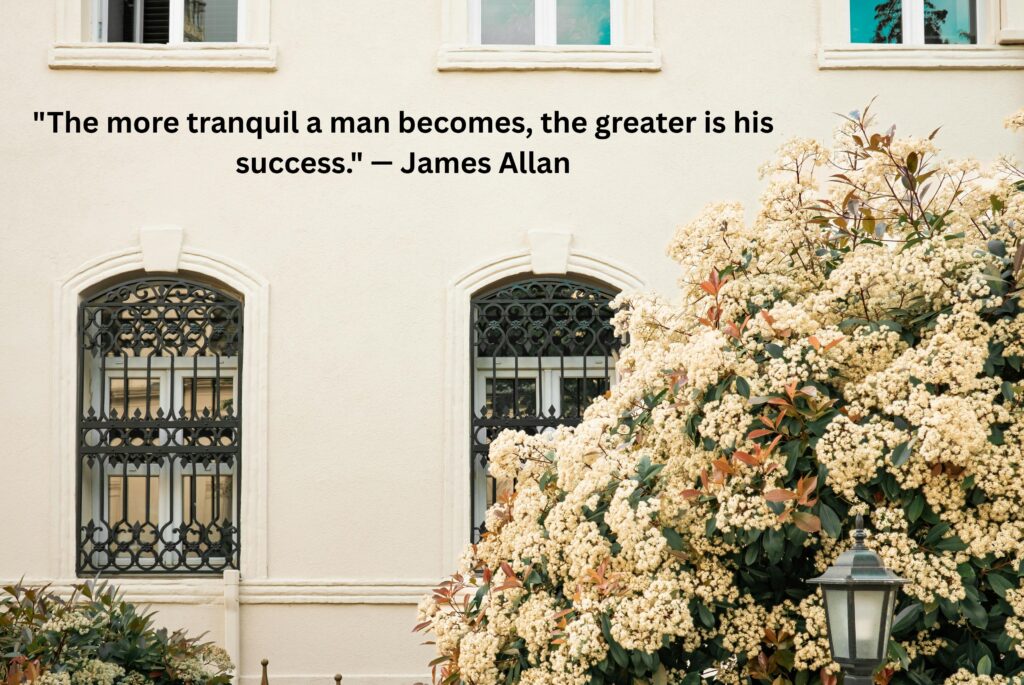
Stress frequently impairs our ability to recognize opportunities and address issues efficiently. Tranquility promotes mental clarity, allowing us to focus on what is genuinely important rather than being sidetracked by dread and uncertainty.
Successful people frequently gain the capacity to remain calm under pressure. Their composure allows them to negotiate obstacles more efficiently than others who let emotions rule them.
Real-life Example
During a critical business meeting, a calm leader may think clearly and speak well, whereas an anxious leader may struggle to make good decisions.
- “Within you, there is a stillness and a sanctuary to which you can retreat at any time.” — Hermann Hesse.
Meaning and Explanation
External conditions are continuously changing, but your inner world can stay consistent. This phrase reminds us that tranquility is always available if we know how to find it.
We can reconnect with our inner peace by practicing mindfulness, introspection, prayer, or spending quiet time alone. These practices help to alleviate stress and restore emotional balance.
Many people seek tranquility in external sources when, in fact, the greatest source of comfort is typically found within themselves.
Real-life Example
Someone who is feeling overwhelmed at work can go for a short stroll, practice deep breathing, or spend some quiet time reflecting. These simple steps can help to restore a sense of peace and clarity.
- “Peace emerges from inside. “Do not seek it without.” – Buddha
Meaning and Explanation
Many people spend years seeking serenity in external things like money, relationships, status, or material belongings. While these goods may bring immediate delight, they rarely provide long-term inner tranquility.
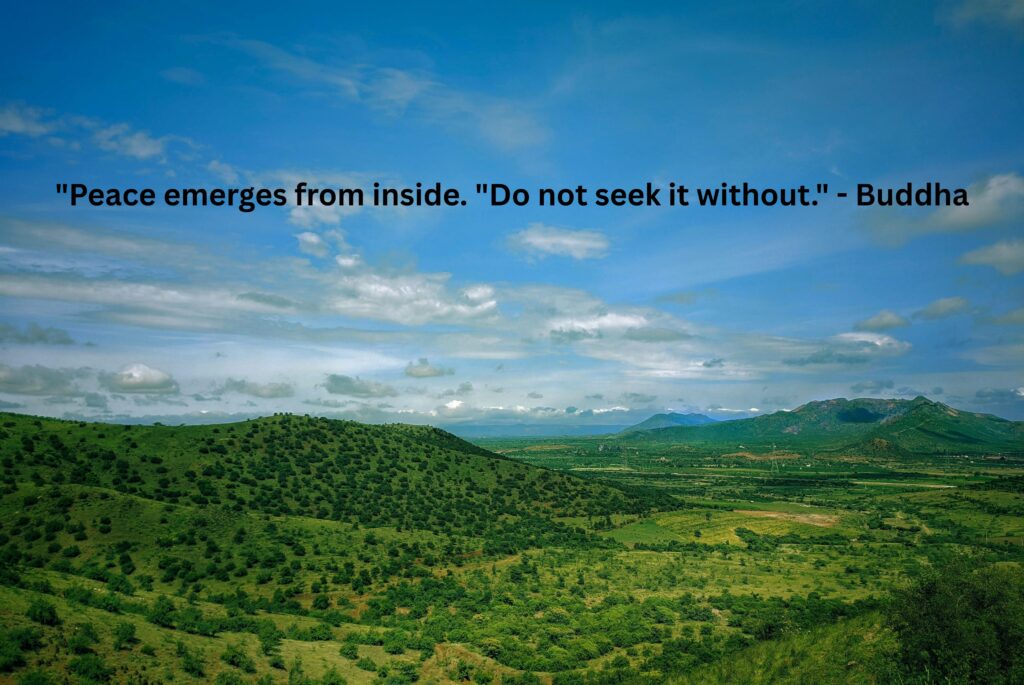
This aphorism emphasizes that tranquility is an inside state. It grows when you acquire self-acceptance, gratitude, and emotional regulation. When you stop relying on external factors for happiness, you acquire more independence and stability.
A tranquil mind is not achieved by getting all you desire. It is built by valuing what you have and accepting what you cannot change.
Real-life Example
A person may acquire a new car with the expectation that it will make them happy. The enthusiasm lasts just a short period, but genuine pleasure comes when people learn to respect themselves independent of their possessions.
- “Happiness does not come ready-made. “It stems from your own actions.” —The Dalai Lama
Meaning and Explanation
Many individuals hope for happiness to arrive someday. They believe that gaining a promotion, finding a partner, or achieving a specific goal will eventually bring them serenity.
The Dalai Lama reminds us that happiness is something we cultivate through our daily decisions. Acts of kindness, gratitude, patience, and self-care all help to make life more pleasant and satisfying.
Instead of waiting for ideal circumstances, work on developing behaviors that promote emotional well-being. Small positive activities frequently yield the best long-term rewards.
Real-life Example
Someone who exercises on a regular basis, practices gratitude, and spends time with loved ones frequently feels more at peace than someone who is continually striving for achievement without caring for themselves.
- “The nearer a man comes to a calm mind, the closer he is to strength.” — Marcus Aurelius
Meaning and Explanation
Many people mistake stillness for weakness, while true strength is often expressed via self-control. A calm person can think carefully in challenging situations and avoid making rash decisions.
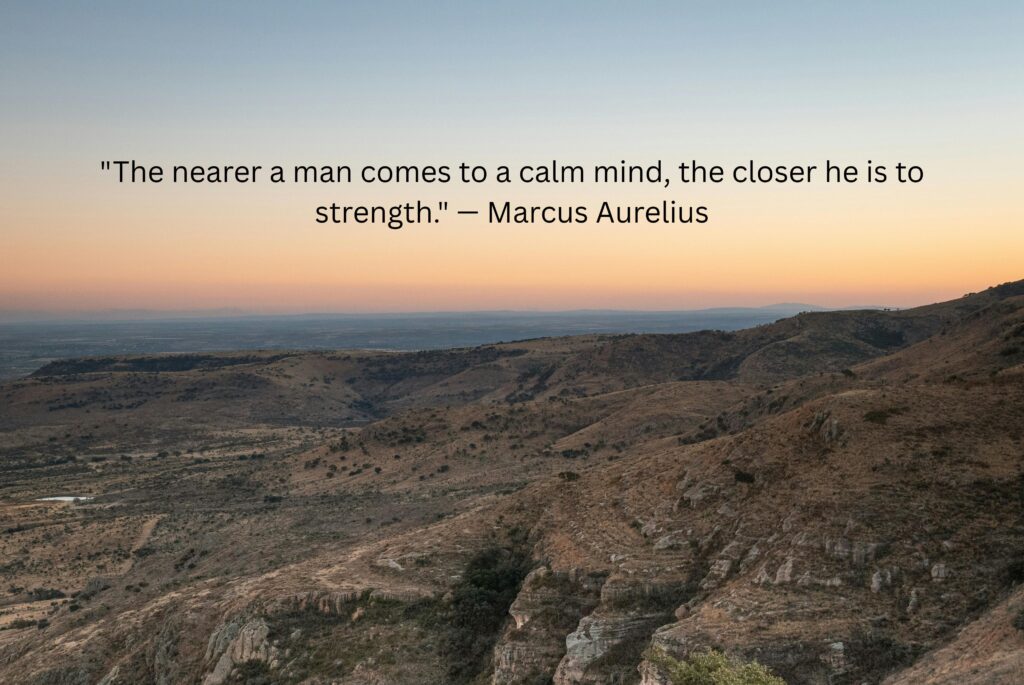
Marcus Aurelius believed that emotional discipline was one of life’s most valuable qualities. When you learn how to remain calm under pressure, you gain a significant advantage over stress and uncertainty.
A peaceful mind enables you to concentrate on solutions rather than being trapped by issues.
Real-life Example
During a family argument, one individual reacts emotionally, exacerbating the issue. Another person keeps calm, listens intently, and contributes to a peaceful resolution of the situation. The second individual exhibits true strength.
- “Almost everything will work again if you unplug it for a few minutes, including you.” — Anne Lamott
Meaning and Explanation
Modern life keeps us continuously connected. Phones, emails, social media, and constant tasks can drain our mental energy.
This proverb serves as a reminder that relaxation is not a luxury but a need. Taking breaks helps your mind heal, refuel, and regain clarity. Without rest, stress accumulates until it threatens your health and happiness.
Allowing yourself to pause can have a significant impact on your mental health and overall well-being.
Real-life Example
After working for hours without taking a break, someone may feel overwhelmed and frustrated. A quick trip outside or a few minutes of quiet thought might help them return focused and energized.
- “Keep calm and carry on.” – British government motto
Meaning and Explanation
Although simple, this well-known saying offers a strong lesson. Life will always bring obstacles, disappointments, and unanticipated hardships. Worrying unduly seldom improves the situation.
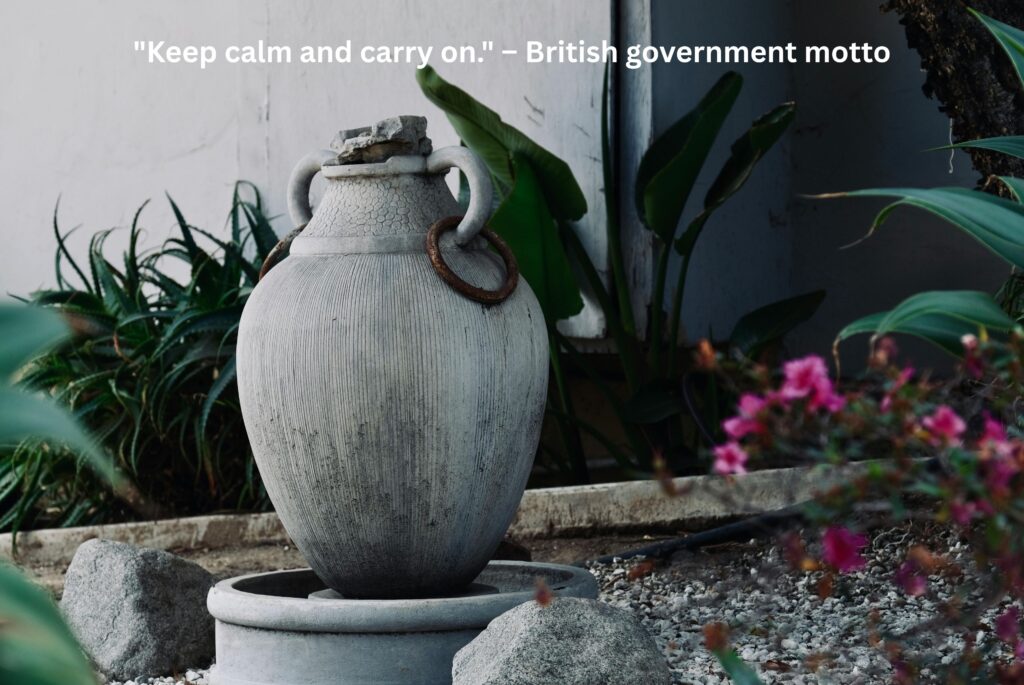
The phrase promotes resilience, patience, and determination. Instead of panicking when difficulties arise, concentrate on taking one step at a time. Calm action is frequently more beneficial than passionate reactions.
People who cultivate this perspective are less anxious because they believe they can handle whatever comes next.
Real-life Example
Someone experiencing a terrible financial situation may be tempted to panic. They are significantly more likely to succeed if they remain calm, devise a realistic plan, and act consistently.
How to Apply These Quotes for Peace of Mind in Everyday Life
While reading quotes might be beneficial, real change comes from putting their lessons into practice.
Use One Quote to Begin Your Day
Every morning, pick a quote and consider its meaning before starting your day.
Put Your Favorite Quote in Writing
As a reminder to maintain composure under pressure, post a quote in your diary, on your desk, or as the wallpaper on your phone.
Be Grateful Every Day
A lot of statements about peace of mind emphasize gratitude and satisfaction. Take a few minutes every day to make a list of your blessings.
Let Go of Things You Can’t Control
Ask yourself, “Can I control this?” while you’re feeling overburdened. If not, concentrate on other things.
Guard Your Inner Calm
Steer clear of pointless drama, negativity, and continual comparison. One of your most precious possessions is your tranquility.
Conclusion
A flawless life does not lead to peace of mind. It can be discovered in a well-rounded perspective. It gets easier to maintain composure in any circumstance the more you cultivate self-awareness, patience, thankfulness, and mindfulness.
Use these quotations about peace of mind as daily reminders that it’s important to safeguard your happiness and emotional equilibrium.